
How to Rent Out Your House in Austin: A First-Time Landlord's Guide
Turning a house into a rental for the first time involves more steps than just putting up a listing — here's the actual sequence that gets it done correctly.
Decide Self-Managed or Professionally Managed
Before anything else, decide whether you're self-managing or hiring a property manager, since this decision shapes every following step — how you screen tenants, collect rent, and handle maintenance requests all depend on it.
Price It Based on Real Comparables
Pricing a rental based on active and recently leased comparable listings in the immediate area — not a generic Austin-wide average — gets closer to the rate that will actually attract qualified tenants without leaving money on the table or sitting vacant.
Prepare the Property
Basic repairs, a deep clean, and confirming smoke detectors and safety systems function properly aren't just good practice — some are legal requirements under Texas Property Code habitability standards, so treat this step as compliance, not just presentation.
Market the Vacancy
Good photos and a clear, accurate listing description matter as much for a rental as for a home sale — list on the platforms where Austin renters actually search, and be upfront about pet policy, parking, and any HOA restrictions to avoid wasted showings.
Screen Every Applicant Consistently
Apply the same screening criteria — income verification, credit check, rental history, background check — to every applicant, documented the same way each time, both to find a reliable tenant and to avoid fair housing risk from inconsistent treatment.
Use a Written Lease
A comprehensive written lease covering rent amount, due date, late fees, pet policy, maintenance responsibilities, and security deposit terms protects both parties far better than a verbal agreement or an incomplete generic template.
Handle the Security Deposit Correctly From Day One
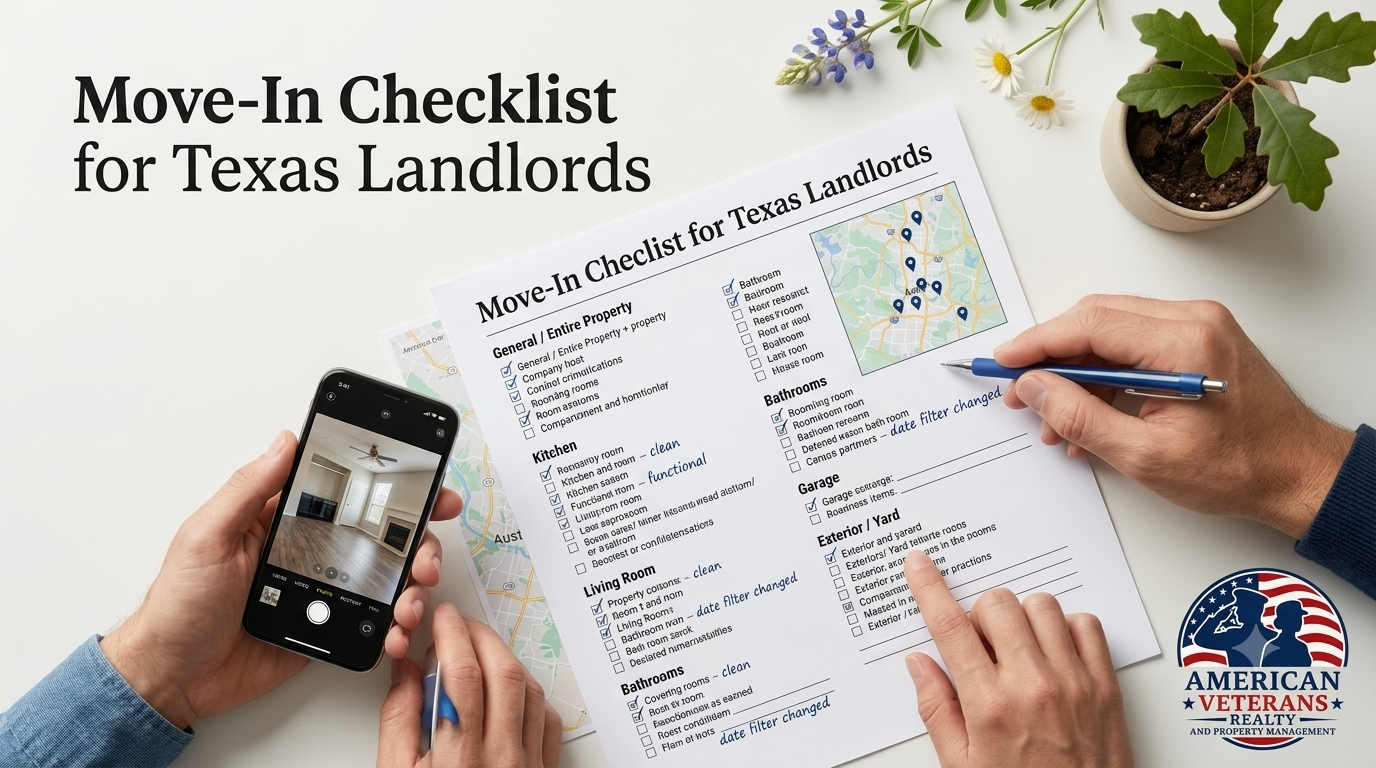
Document the property's move-in condition thoroughly with photos and a written checklist — this record is what protects you if a security deposit dispute arises at move-out, governed by Texas Property Code Chapter 92's 30-day return requirement.
Frequently Asked Questions
Whether to self-manage or hire a property manager — this decision shapes every following step, from tenant screening to rent collection and maintenance handling.
It protects both parties if a security deposit dispute arises at move-out, since Texas Property Code Chapter 92 requires deposits to be returned within 30 days with an itemized list of any deductions.