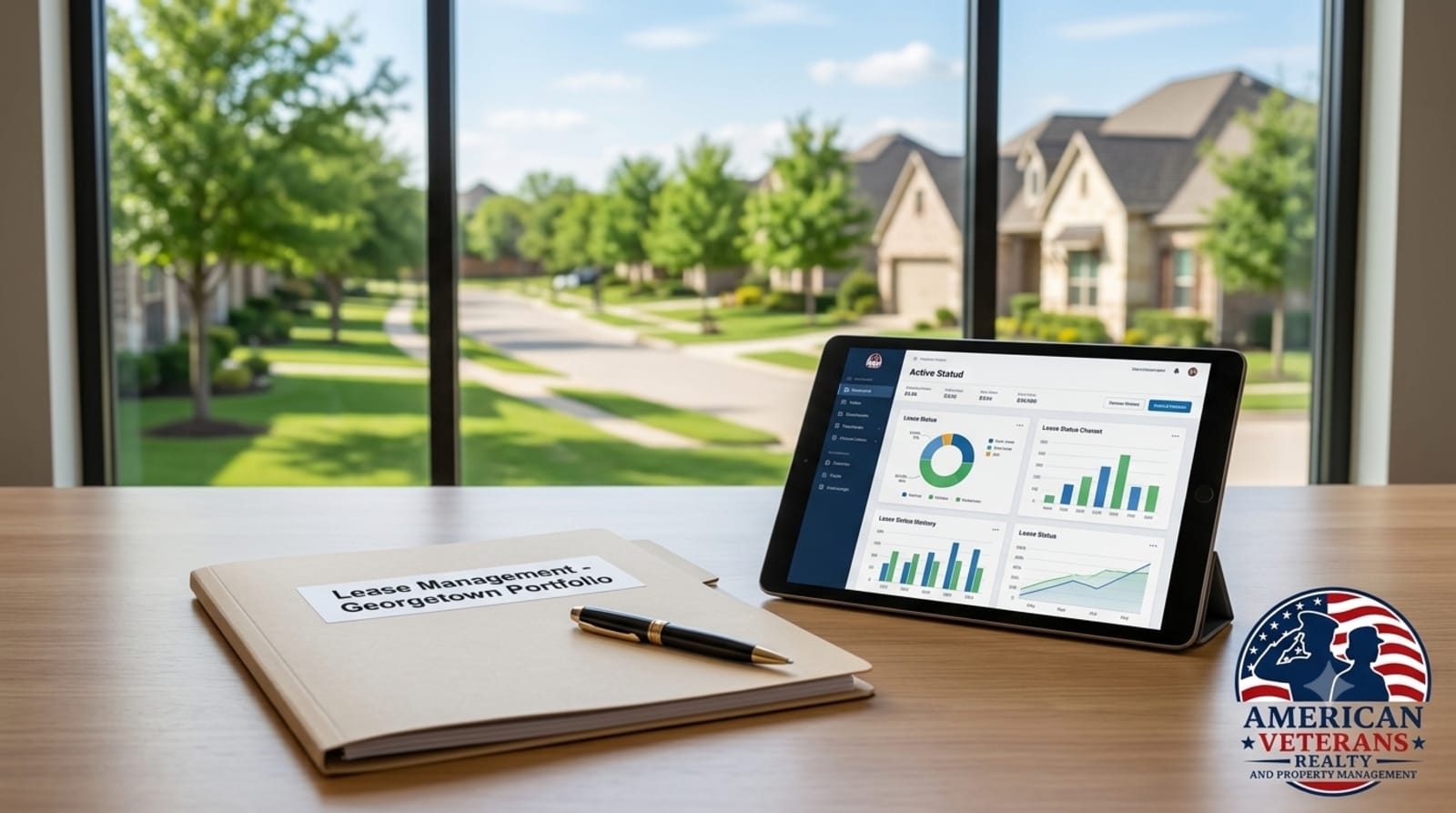
Lease Management for Georgetown Rentals
Lease management covers everything that happens after signing — tracking key dates, handling renewals, and keeping documentation organized for the life of the tenancy.
Tracking Key Dates
Lease expiration, renewal decision deadlines, and any scheduled rent reviews should be tracked systematically — missing a renewal window by even a few weeks can mean losing a good tenant to indecision.
Renewal Timing
Starting the renewal conversation 60-90 days before expiration gives both sides time to negotiate terms, or for the owner to start marketing if the tenant is moving on.
Keeping the Lease Texas-Compliant
Texas Property Code requirements around security deposits, notice periods, and habitability should be reflected accurately in the lease — an outdated or generic template can create real legal exposure.
Documentation Throughout
Every amendment, notice, and communication related to the lease should be documented in writing and kept on file — this is what protects a landlord's position if a dispute arises later.
Why This Matters More With Multiple Properties
Owners managing several Georgetown rentals benefit most from a systematic lease management process, since tracking key dates manually across multiple properties is where things most often slip.
Frequently Asked Questions
60-90 days before expiration, giving time to negotiate terms or start marketing if the tenant isn't renewing.
An outdated or generic lease can create real legal exposure — terms should be reviewed periodically against current Texas Property Code requirements.